
Sillar Route tour
4.5 hours through the sillar quarries and the Culebrillas petroglyphs.
- 4.5 hours
- Moderate

Travel guide
In Arequipa you explore a Historic Center built of sillar, with the Plaza de Armas, the Cathedral and the Santa Catalina Monastery, and head out to the Sillar Route, Salinas Lagoon and Colca Canyon. Two or three days are enough for the city and two tours.
In Arequipa you walk through a Historic Center made of sillar, with the Plaza de Armas, the Cathedral and the Santa Catalina Monastery, and head out to three nearby landscapes: the quarries of the Sillar Route, Salinas Lagoon with its flamingos and Colca Canyon, where the condors fly.
Because of sillar, a white or pinkish volcanic stone used to build its churches, mansions, arcades and bridges. It formed from eruptions millions of years ago and is light but strong. To withstand earthquakes, builders used it in thick walls and vaulted roofs. The Historic Center is a UNESCO World Heritage Site.
The quarries are north of the city, in Cerro Colorado. The Añashuayco ravine begins on the slopes of Chachani, and there the stonecutters still cut and carve sillar by hand: their knowledge of quarrying and carving the stone has been Cultural Heritage of the Nation since 2014.
The Sillar Route tour runs in the afternoon: it picks you up at your hotel at 2:00 p.m., tours the Añashuayco quarries, walks to the Culebrillas ravine, with its petroglyphs, and drops you off at the Plaza de Armas at 6:00 p.m.
At 4,300 m above sea level, Salinas Lagoon is the largest in the region and lies within the Salinas and Aguada Blanca National Reserve, home to all three species of high Andean flamingos.
The Salinas Lagoon and Lojen mini volcano tour leaves at 6:00 a.m. and stops for breakfast in Chiguata. After the salt flat, with flamingos, vicuñas, llamas and alpacas, you see traditional salt extraction and the Lojen mini volcano, a forest of rocks with hot pools. Lunch is in Characato.
Chivay, the capital of the valley, is 151 km from Arequipa. From the Cruz del Cóndor viewpoint you can watch the Andean condor fly, one of the largest flying birds in the world.
The Colca Canyon day trip picks you up between 2:30 and 3:00 a.m.: you have breakfast in Chivay, at 8:15 a.m. you’re at Cruz del Cóndor and on the way back you stop at the Chacapi hot springs. The Colca Canyon 2 days, 1 night tour leaves between 7:30 and 8:00 a.m., spends the night in Chivay and sees the condors on the morning of day two. If you only have one day, choose the day trip; if you’d rather not get up so early and want to go up more gradually, the two-day tour.
| Place | Altitude | Tour |
|---|---|---|
| Arequipa, the city | 2,335 m above sea level | Starting point |
| Sillar quarries | 2,300 m above sea level on average | Sillar Route |
| Colca Valley | 3,635 m above sea level | Both Colca tours |
| Salinas Lagoon | 4,300 m above sea level | Salinas Lagoon and Lojen |
| Mirador de los Volcanes, at Patapampa | 4,910 m above sea level | Both Colca tours |
Above 2,500 m, it’s a good idea to drink plenty of fluids, eat light and avoid strenuous activity for the first few hours. That’s why it’s best to start with the city and the Sillar Route, which don’t reach that altitude, and leave Salinas and Colca for later. The 2-day tour carries an oxygen tank.
If you’d rather spend a night in Colca, use days 2 and 3 for the 2 days, 1 night tour: on day 3 you return to Arequipa after lunch in Chivay. With two days, stick to days 1 and 2.
Pick your date and book the Sillar Route, Salinas Lagoon or Colca in one day or in two days.
Since 2000. UNESCO listed it for its sillar buildings, which blend European and Indigenous techniques in sturdy walls, arches, vaults, courtyards and richly worked Baroque facades.
El Misti, Chachani and Pichu Pichu, all three over 5,600 m high; the highest is Chachani. All three are inside the Salinas and Aguada Blanca National Reserve.
No, they’re not: the lagoon is inside the reserve, which covers more than 366,000 hectares between Arequipa and Moquegua. The Colca tours cross the reserve on the way to Chivay, with vicuñas, llamas and alpacas; you visit the salt flat with flamingos on the Salinas Lagoon tour.
Traditional food is eaten in picanterías: chupes, rocoto relleno (stuffed rocoto peppers), soltero de queso, ocopa and, on Sundays, adobo arequipeño. For dessert, queso helado, an ice cream. Characato, where the Salinas Lagoon tour stops for lunch, is known for its picanterías.
Warm clothes, because the Salinas and Colca tours leave early and go above 4,000 m, plus sunscreen, a hat and sunglasses. For the hot springs at Lojen and Chacapi, a swimsuit, and cash for the entrance fees that are paid separately. January to March is the rainy season: add a rain jacket.
4.5 hours through the sillar quarries and the Culebrillas petroglyphs.

Salt flat at 4,300 m, flamingos, vicuñas and Lojen’s hot springs.
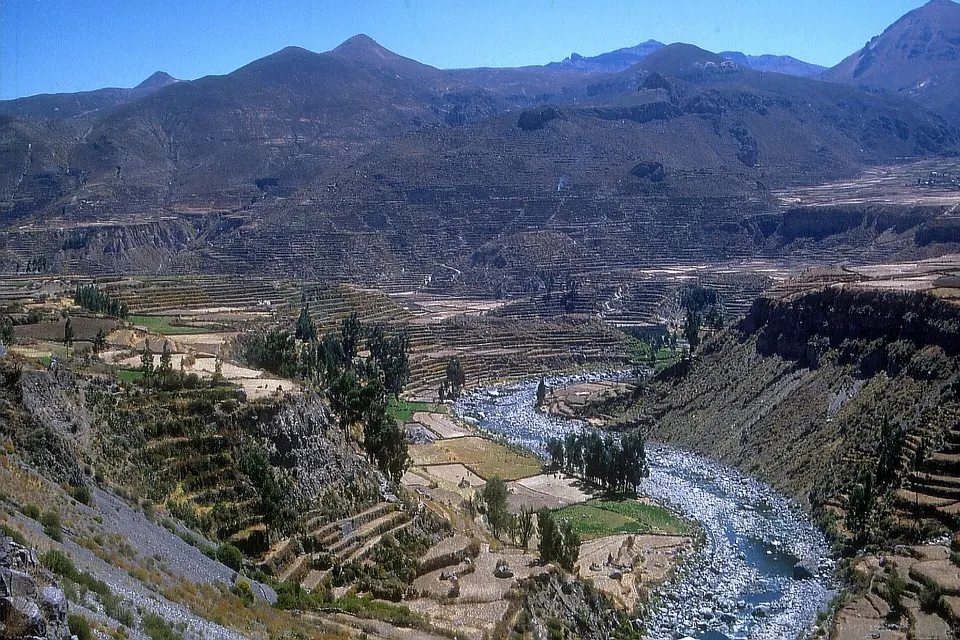
2 days: Volcanoes Viewpoint, Chacapi hot springs and Cruz del Cóndor.
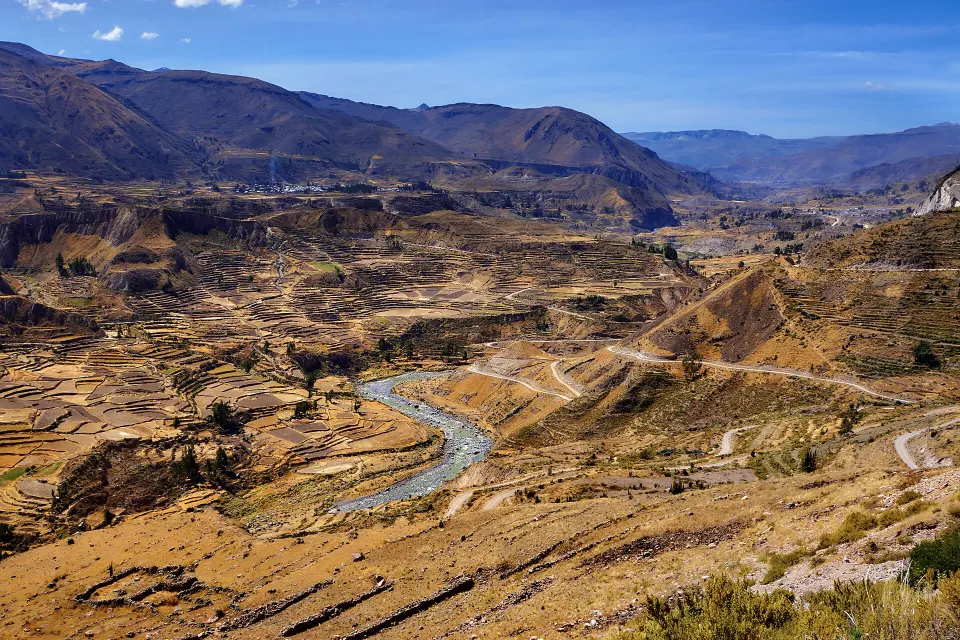
One day: Cruz del Cóndor, Chivay, Maca, Yanque and Chacapi hot springs.