Ballestas Islands tour
Speedboat to the Candelabra and the islands, with sea lions and penguins.
- Easy

Travel guide
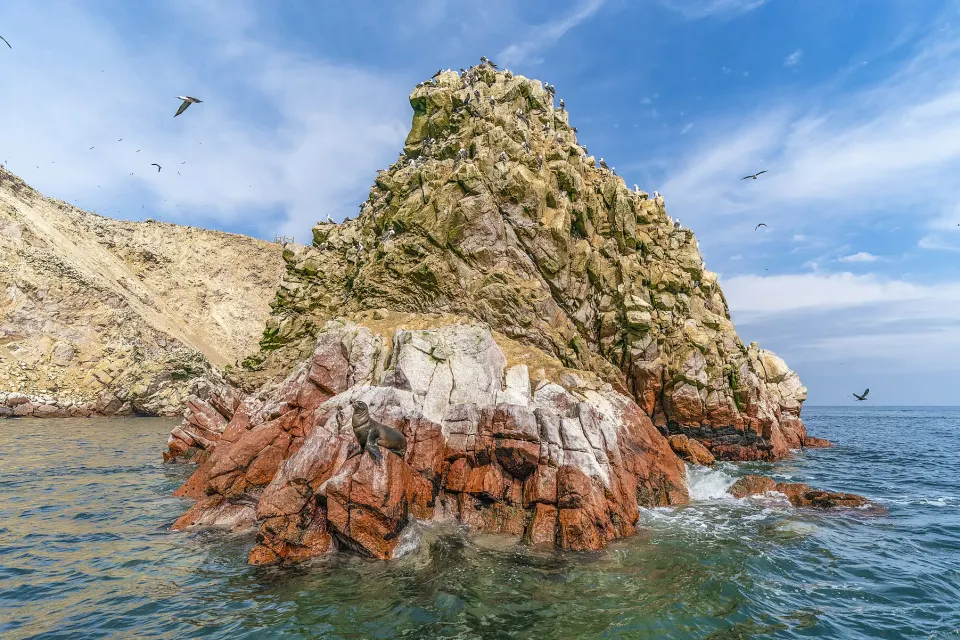
The Ballestas Islands are three rocky islands in the sea off Paracas, in the Ica region, and part of the Guano Islands, Islets and Capes National Reserve System. You visit them by boat from the Paracas pier, without going ashore, to see sea lions, Humboldt penguins and guano birds.
They lie offshore, opposite the Paracas National Reserve, in the district of Paracas, Pisco province, Ica region. From Paracas Bay it’s about 20 km by sea. Paracas is about 250 km south of Lima and roughly an hour by road from Ica.
There are three islands, Ballestas Norte, Ballestas Centro and Ballestas Sur, and they belong to the Guano Islands, Islets and Capes National Reserve System (Reserva Nacional Sistema de Islas, Islotes y Puntas Guaneras). Created in 2009, it protects 22 islands and islets and 11 headlands along the Peruvian coast and is managed by Sernanp, Peru’s national protected areas service. The Ballestas get more than 400,000 visitors a year.
The islands are home to wildlife typical of the Humboldt Current. What you’ll see most:
Besides the sea lions, bottlenose dolphins and the marine otter, known locally as gato marino or chungungo, may show up along the way. The islands are also a guano deposit, the product Peru exported in the 19th century.
The Paracas Candelabra is a huge candelabra-shaped geoglyph, also called the Trident or Tres Cruces, etched into the slope of Cerro Colorado, inside the Paracas National Reserve. Boats pass in front of it on their way to the islands. Its origin, age and meaning are still unknown, and it has been linked to the Nazca Lines and the Pampas de Jumana.
Since 2016 it has been a Cultural Heritage of the Nation site, the first cultural landscape in Peru to receive that designation. The local winds, called paracas, cover it with sand and sweep it clean again, and that keeps its lines sharp.
To avoid disturbing the wildlife. Sernanp doesn’t allow passengers to land: the islands are a resting and breeding area for these species, and they’re watched over by Sernanp park rangers and Agro Rural island wardens.
You see everything from the boat, which gets close enough to view the colonies and the rock arches the sea has carved into the islands. On board, you’re asked not to make loud noises or feed the animals.
The islands are open to visitors only until 1:00 p.m. On the Ballestas Islands tour you board a modern tourist speedboat at the Paracas pier, with a bilingual guide and safety equipment. First you pass the Candelabra, then you cruise past the islands’ rock formations and wildlife. Departures run every half hour from 8:30 a.m. to 12:30 p.m. The Sernanp and pier fee is paid separately.
It depends on where you’re staying and how much you want to see that day:
Pick your date and book the Ballestas Islands tour.
They’re in the district of Paracas, which belongs to the province of Pisco, in the Ica region. The boats leave from the Paracas pier.
No. They belong to the Guano Islands, Islets and Capes National Reserve System. The Paracas National Reserve is a separate protected area, on the mainland opposite the islands, and it’s where the Candelabra is. Both are managed by Sernanp.
All year round. The climate here is dry, with little rain and an average annual temperature of about 22 °C.
No. You can only see it from the sea: entering the area on foot or in any vehicle is prohibited, and damaging the geoglyph is a crime. The boats heading to the Ballestas Islands pass right in front of it.
Yes. The Paracas and Ica day trip from Lima leaves before dawn, reaches the islands at 8:00 a.m. and gets back to Lima around 10:00 p.m., after stopping at a winery in Ica and in Huacachina.
Speedboat to the Candelabra and the islands, with sea lions and penguins.

Ballestas, an Ica winery and Huacachina in one day, leaving from Lima.

Ballestas by speedboat, the boulevard and the Paracas National Reserve.
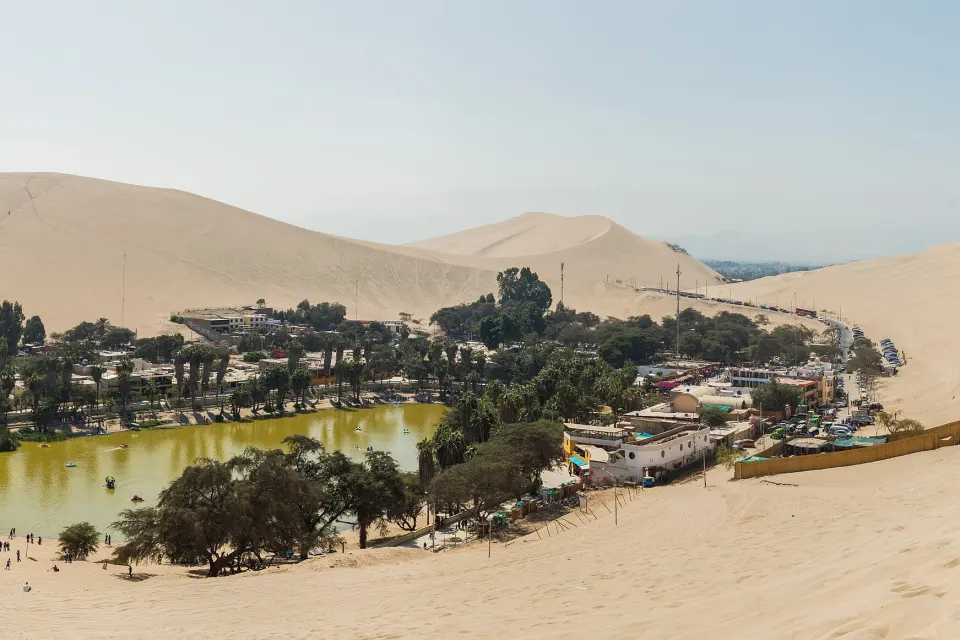
Ballestas, the Paracas Reserve and dune buggies in Huacachina, from Ica.